
Tether Freezes $500M+ USDT Holdings Across Blockchain Addresses
Tether has frozen more than $500 million worth of USDT held across Ethereum and Tron blockchain addresses, according to on-chain data and wallet monitoring platforms.
The move highlights Tether’s ability to blacklist wallets linked to suspicious activity, reinforcing compliance efforts while reigniting discussions about centralized control within the stablecoin ecosystem.
Key Takeaways
- Tether has frozen over $500 million in USDT across Ethereum and Tron addresses.
- The action is part of the company’s compliance and anti-crime initiatives.
- USDT remains the largest stablecoin by market capitalization.
- The freeze demonstrates Tether’s ability to blacklist blockchain wallets.
- The development may influence discussions around stablecoin regulation and decentralization.
Why Did Tether Freeze More Than $500 Million in USDT?
Tether regularly monitors blockchain activity and cooperates with law enforcement agencies worldwide.
When wallets are linked to sanctions violations, fraud investigations, hacks, or other illicit activities, the company can freeze USDT held in those addresses.
The latest action affected addresses on both Ethereum and Tron, the two largest networks for USDT circulation. Together, these blockchains account for a significant portion of Tether’s stablecoin supply and transaction volume.
What Does the USDT Freeze Mean for the Crypto Market?
The freeze demonstrates a key feature of centralized stablecoins: issuers retain the authority to block transfers and restrict access to tokens when required.
For regulators and compliance-focused institutions, this capability can be viewed as a safeguard against financial crime.
However, some crypto advocates argue that such controls differ from the censorship-resistant principles associated with decentralized cryptocurrencies like Bitcoin.
Despite the freeze, there has been no indication of broader disruption to USDT liquidity or market operations. Tether continues to play a central role in cryptocurrency trading, payments, and decentralized finance activity.
How Does Tether Freeze Wallet Addresses?
Tether can place specific blockchain addresses on a blacklist through its smart contract infrastructure. Once blacklisted, the affected wallets cannot transfer, redeem, or interact with frozen USDT balances.
This mechanism has been used multiple times in recent years as regulators worldwide increase scrutiny of stablecoin issuers and digital asset transactions.
Expert Insight: Why Stablecoin Compliance Matters
Industry analysts note that stablecoin issuers face growing pressure to strengthen compliance frameworks as digital assets become more integrated into traditional financial systems.
The ability to freeze assets may help reduce criminal activity and improve institutional confidence. At the same time, it highlights the trade-off between regulatory compliance and decentralization within the stablecoin sector.
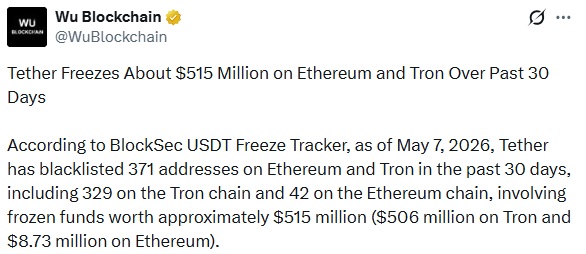

Source: X.com
What Investors Should Watch Next
- Additional details regarding the affected wallet addresses.
- Potential regulatory responses related to stablecoin oversight.
- Future compliance actions by Tether and other stablecoin issuers.
- USDT market capitalization and liquidity trends.
- Growing adoption of regulated stablecoins across global markets.